
Interview: Dani Reyes-Acosta on Reimagining Who Belongs in the Outdoors
A conversation with filmmaker and outdoor storyteller Dani Reyes-Acosta on challenging dominant narratives, reimagining our connection to nature, and why women's stories in the outdoors matter now more than ever.
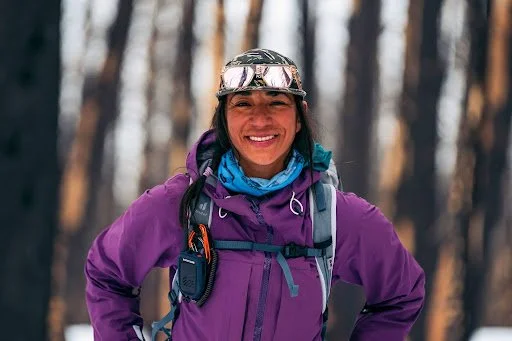
Through our "Women Adventurers Who Inspire Us" series, we highlight the voices of women who are expanding that definition.
In this conversation with AdventurUs intern Caren Ensing, Dani shares about the impact the outdoors has had on her, how she has made her passion for the outdoors her career, and why elevating the voices of women in the outdoors is more important than ever.
Q. How has the outdoors personally made a difference and had a positive effect on your life?
Ans: The outdoors is a mirror for where I am at any given time, whether that's feeling strong, needing to be introspective, or wanting to connect with other people. My experience in the outdoors is one of three things: an opportunity to heal, connect, or grow. Sometimes a given adventure has a specific intention behind it, but sometimes I see what unfolds. I might set out to ski off a certain peak, climb a specific line, or run a specific trail, but maybe the weather is telling me I shouldn't do it, I'm in a bad mindset because I've had a rough day, or my friends need extra support. Oftentimes, the outdoors is a mirror for the experiences of being human, and it provides an opportunity to lean into those experiences, rather than assert what I want to do in that space. It reflects the true essence of human nature.
Q. Who introduced you to the outdoors?
Ans: My family. I grew up at the beach in LA, and so I would walk our dogs down on the beach with my father, and I have some really poignant memories about chasing the sunset on a bike, as my dad would cheer us on. Some of my earliest memories are of camping in Big Bear or skiing at Mammoth. These childhood memories really stuck with me. Whether it was like every day outdoors or a bigger trip, those are the kinds of things that set a tone for your life.
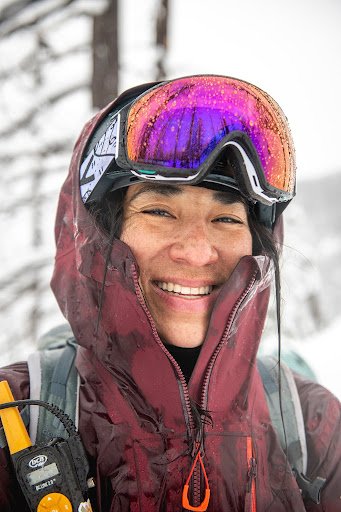
Q. What inspired you to make your passion for the outdoors into your career?
Ans: I think it's twofold.
First, when I left corporate life in 2014, the outdoors were, in many ways, a reflection of who I wanted to be. I saw that pursuing any specific single job, whether within a corporation or as an athlete, felt very constrictive. The outdoors has given me this path to embrace all of the different ways that I am. I wanted to be a generalist, and while I liked the jobs I had before, I always felt like I was being pushed into one box. I want to be this person who has many different things and could embrace and translate that whole diversity of human experiences into my work.
Second, I also wanted to see how I could translate my passions through creativity and storytelling as a way to support empowerment and find a path of justice for a better future. I was disappointed with the type of storytelling I saw in the outdoor industry. It was not accessible to the majority of people the industry sees. Research shows that storytelling and marketing in the outdoor industry are focused on the "core" audiences, in the sense of those aspiring to be the best, the fastest, and the strongest. We know the majority of customers want accessible experiences that speak to them as everyday people. In my frustration with this main narrative of hyper-masculine dominance-focused storytelling, I realized I could do something to change that. I don't want to complain about it; I want to make it better.
When we think about some of the underlying things that are wrong with society - like environmental destruction and record-level rates of depression and anxiety in the Global North - it is, in part, because we see so much separation of people from nature. When we look at stories in an objective-driven sense, of peaks you must summit or lines you must be sent, we commoditize that experience. Maybe this is just me calling out late-stage capitalism, but this is a thread that lives in our whole series.
We are trying to reimagine our relationship with these places, not as commodities, but as enablers of the self and of others who are building communities and a different future. The world right now shows us that it's a good thing to divorce ourselves from human experiences or commoditize these places we create. There is a cultural shift that needs to happen in outdoor storytelling as we move the focus to the role women and immigrants of color play in mountain culture. We need to make new stories about community, belonging, and what it means to be yourself, no matter who you are. We need to not only 'talk the talk' about what it means to be welcome but also show what that space could be.
Q. Why do you think women's only outdoor groups and stories are important?
Ans: The value lies in providing a space where folks feel like they are a part of the conversation, have personal agency, and even lead. When we don't have affinity spaces, often we are silenced without even realizing it. Our dominant narrative is driven by masculinity, so often women have internalized misogyny, and we can find ourselves not speaking up in mixed gender environments. It is important to have a space where we can fully be ourselves, all of who we are, without considering the pressures of gender normative behavior.
Q. And what is particularly powerful about women in the outdoors?
Ans: First, statistics show that all-women groups make safer decisions and have fewer accidents than all-men or mixed groups. So, as an output and more nerdy answer, this element of risk management is important and makes the experience more enjoyable for all involved.
Second, what is powerful, particularly in the context of the film, is that there's a strong theme of rematriation, of coming back to the land and women leading conversations. Tied to that is this bigger idea that I mentioned of reconnecting to place and reclaiming space. When we look at the dominant narrative of who belongs outdoors and what "wild" and "untamed" spaces are, we see that women have historically been domesticated and subject to the wills, norms, and desires of masculine forces. When women are in the outdoors, we band together, lead, and support each other. This, then, is a sign of the power of our embodied leadership in that space and reclaiming our full selves.
Much of that visibility isn't just about showing that women belong in the space, because obviously they do, but creating permission for others to belong to. By showing this in a film, we open the doors for others to follow. When we expand the conversation beyond our femininity, to be about our connection to place, cultural healing, reclamation of identity, expansion of narrative, and an understanding of community in a post-anthropocentric sense, we look at femininity as a driving creative force deeply tied to Mother Nature herself too.
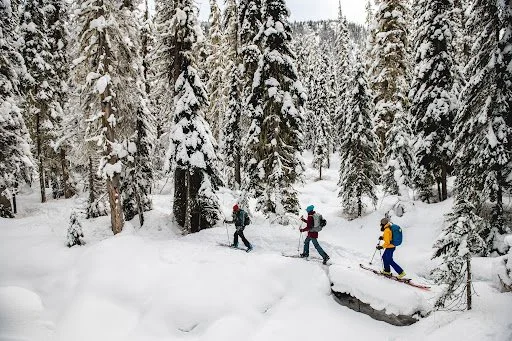
Q. This idea of our belonging and relationship to the environment is so important. One thing I've studied is the extent to which we should center humans in environmental conservation. Historically, we tend to oscillate between these 'anthro' and 'biocentric' philosophies, but on some level, it feels like we need to relate to the environment to protect and be good stewards of it. The question then is how to involve ourselves in alignment with stewardship and not conquest?
Ans: This year, I'm doing a presentation at the Colorado Outdoor Industry Leadership Summit with a friend, who is the education stewardship director for the Access Fund, about how outdoor recreation shouldn't alienate rural communities. Outdoor recreation has been proven to boost local economies and bring tourism, business, and workforce opportunities to cash-strapped rural communities. But, as the outdoor economy increasingly invests in conservation efforts to increase public access to recreation, this focus overlooks the diverse values of public lands for rural and remote communities, which creates tension and resistance to change. Rural and remote communities are often deeply connected to the land, even if they are not indigenous. This presentation aims to provide examples for creating common ground on a shared connection to place and passion for stewardship to build coalitions instead of creating conflict.
Q. How do you separate the outdoors as a passion and a profession?
Ans: The simple answer is I keep things for myself and don't put a lot of things on social media. There are things that I share with the world, and those I keep to myself. It has been a lot of mental training, but sometimes I don't take my phone, or I might take pictures but don't post them. I know that if I am going to create a life outside, even if my work takes a justice-driven approach, it is still commoditizing the outdoors. You have to hold it in one hand and name what it is. Even if I am talking about the most soulful thing in the world, though, I am still commoditizing an experience. So I have to ask myself, what is the intent behind posting a photo or sharing something? Is it to create awareness? Educate? Inspire and create aspirational content? Or am I doing it to brag? It is important to name this and be self-assured that I might want to do things for myself. The boundary is about knowing yourself and knowing your own intentions behind doing something.
Q. What is your most memorable experience outdoors?
Ans: Oh, that's not fair! Every single experience is memorable. The ones that stick with me are the ones that pull at the heartstrings. Instead of saying this is my favorite place, I like to think about the one where I felt the happiest, or strongest, or had the most growth, or rebuilt a friendship. These experiences span the American West, Chile and Peru, upstate New York, and British Columbia. I don't think it is possible to pick just one, because all of these experiences have made me who I am.
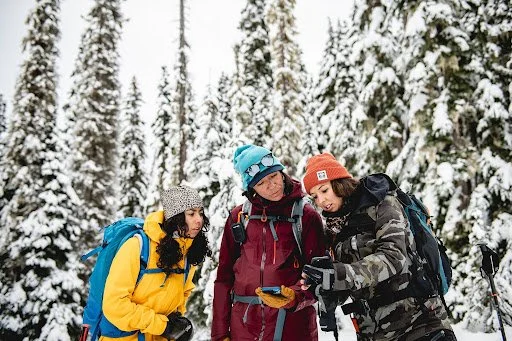
Q. Who is another woman who inspires you in the outdoors?
Ans: Dr. Nina Aragon in Outlier: Common.
Q. What does outdoors mean to you in one word?
Ans: Human nature.
Q. You're stuck on Groundhog Day, and you wake up in one outdoor spot every day. What is it?
Ans: Teton Pass outside of Jackson Hole, Wyoming.
Q. What does women supporting women mean to you?
Ans: Creating opportunities for others to thrive.
At AdventurUs, we celebrate the women who push boundaries, challenge industries, and inspire others to step outside with confidence. Their stories remind us that the outdoors becomes stronger, richer, and more welcoming when more voices are included.
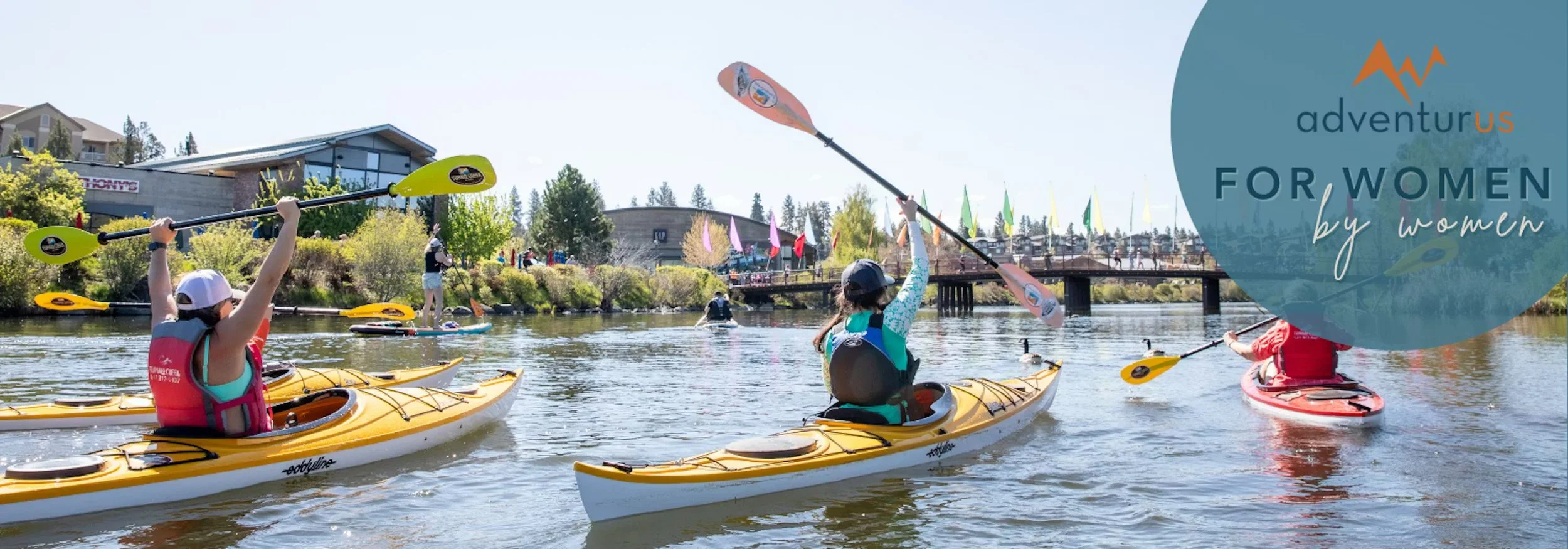
OUR SIGNATURE WOMEN'S ADVENTURE CAMP - BEND, OR
Bend, OR, USA
4 days | Thu 4 Jun - Sun 7 Jun 2026
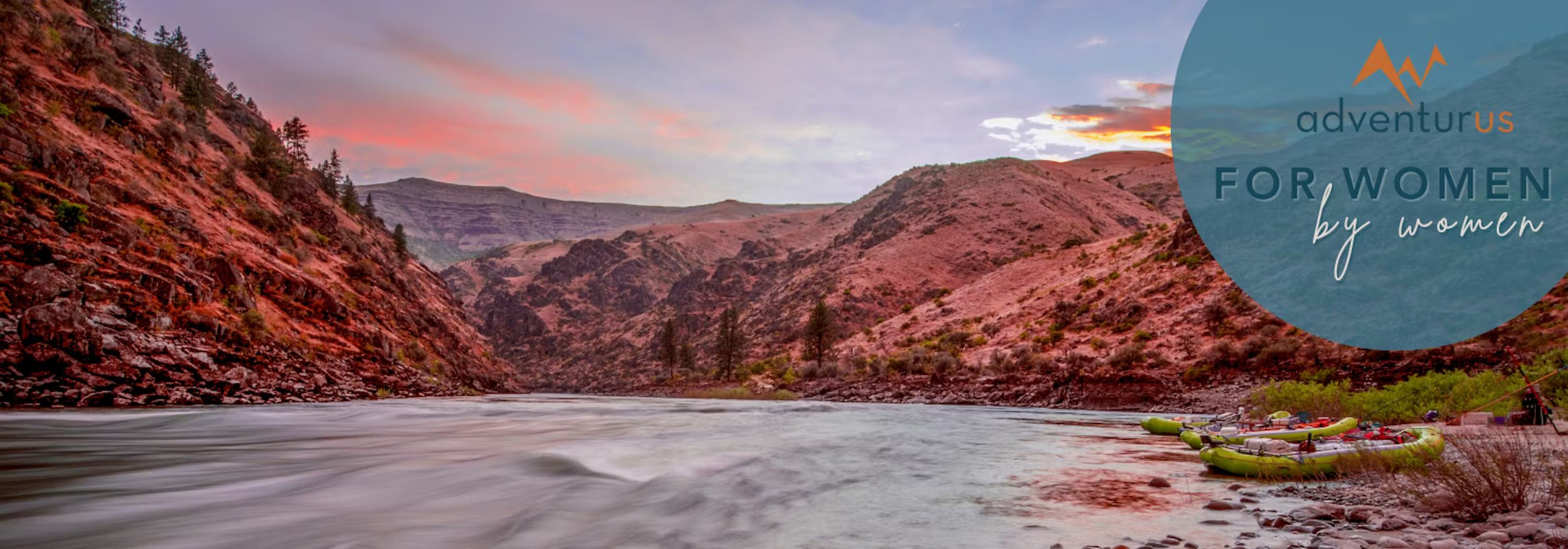
Women & Whitewater: Salmon River Rafting Adventure
Boise & Salmon, Idaho
August 10-15, 2026
