
Interview: Becky Marcelliano on Transitioning Into a Career in the Outdoor Industry
A conversation with onX Maps marketing lead Becky Marcelliano on the difference between access and accessibility, biking across America, and building a career rooted in the outdoors.
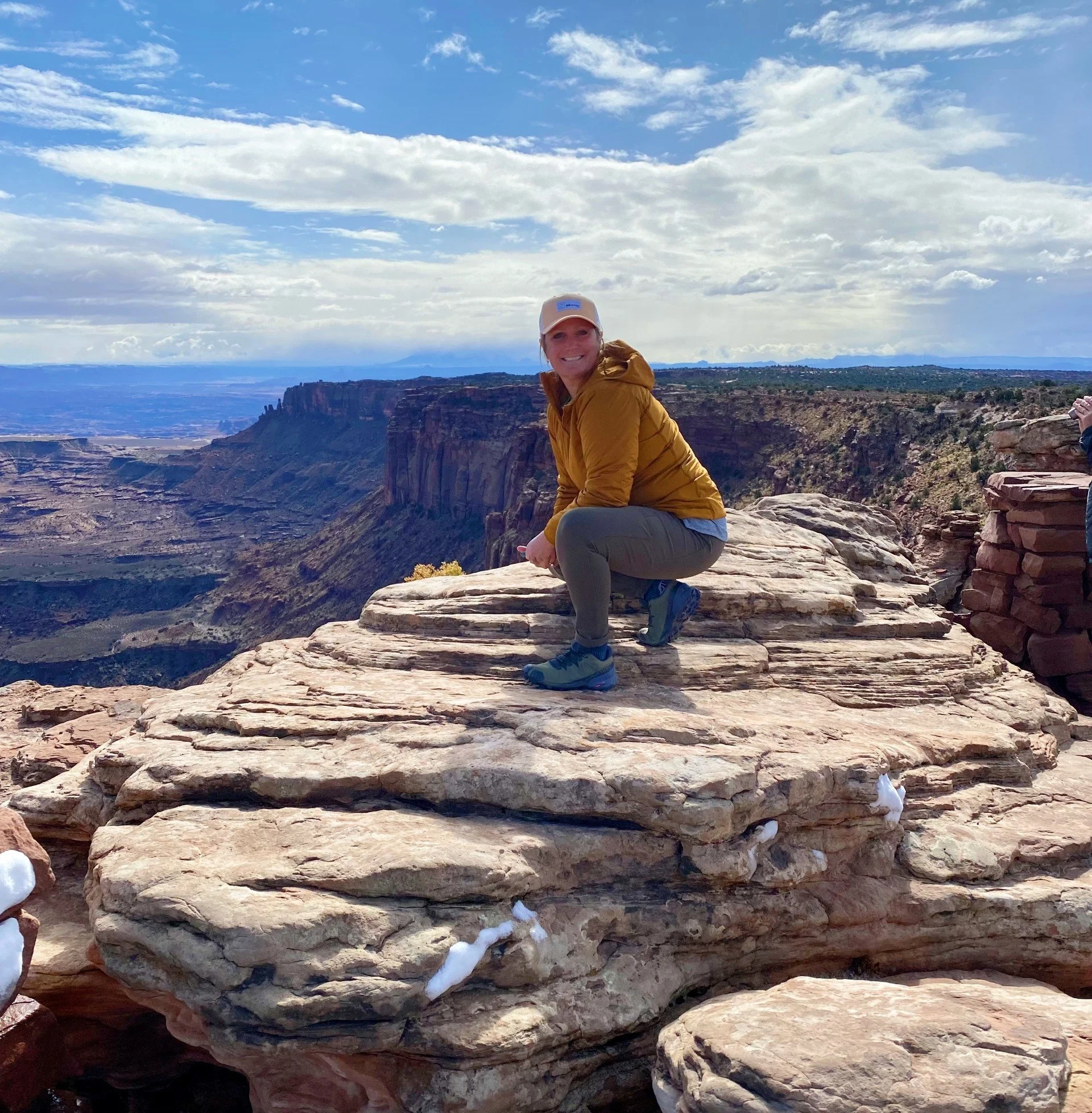
Through our "Women Adventurers Who Inspire Us" series, we highlight the voices of women who are expanding that definition.
One of those voices is Becky Marcelliano, a marketing and brand leader at onX Maps who has spent her career working her way through the outdoor industry, from bike shops and gear companies to leading access and stewardship programs. Becky's path from teaching to customer service rep to brand strategist is a testament to following what you love, even when it means starting over. In 2011, she and a friend biked across the entire United States, an adventure that shaped the way she sees the outdoors, community, and what she's capable of.
In this conversation with AdventurUs intern Caren Ensing, Becky shares why the distinction between "access" and "accessibility" matters, how biking across the country changed her, and why getting outside is something worth fighting for.
Q. How has the outdoors personally made a difference and had a positive effect on your life?
Ans: To sum it up, it has always provided a backdrop for me to learn and challenge myself in new ways. I like forcing myself into personal challenges and taking on big new things. When I take on the next hard adventure, traveling in new ways, or learning new professional skills, it is always within that space.
Q. Who introduced you to the outdoors?
Ans: If I had to pinpoint one person, it would be my dad. He's a nature and wildlife lover. I grew up in New Jersey, so not necessarily a state with prime outdoor habitats or places to go to explore, but there is actually quite a bit of public land. In the area of North Jersey where I grew up, we were just always outside as a family, catching bugs and digging in the dirt. A lot of that attribution is to my dad, who really enjoyed teaching us and showing us those things.
Q. What inspired you to make your passion for the outdoors into your career?
Ans: One thing sort of led to the next. When I was younger, I always played team sports. Then I got into outdoor sports like mountain biking, hiking, and some climbing. That led to camps in the outdoor space, and then guiding at those camps when I got old enough. I became a wilderness trip leader and got my certifications to do that, so it was a gradual progression into the outdoors as a full-time career. Through college, I worked at gear shops and bike shops and had seasonal jobs, like teaching environmental education. After my first adult years of seasonal and part-time jobs adjacent to the outdoors, I went into teaching. I taught at a public school for six years, then I decided I didn't want to do it for the rest of my life. I quit and landed my first desk job in the outdoor industry. I had a cubicle for the first time in my life, and it just kind of grew from there.
I first was a customer service rep and dealer service rep at Deuter backpacks. Even though it was a pay cut from teaching, believe it or not, I wanted to do something that would get my foot in the door. I worked my way into an entry-level marketing role. I was self-taught in that space, and I liked it as a sector of business. After Deuter, I worked for Salomon, and now I am at onX Maps, where I lead our marketing and branding for our access and stewardship program. I work with a ton of different user groups. Our largest audience is hunters, but our users are also skiers, trail runners, hikers, mountain bikers, climbers, and even fishermen. I've learned these groups' differences and similarities and how they advocate together. There's a power when we all come together over things we really care about. These groups aren't as different as they seem, so I love seeing them come together and realize we all value these spaces.
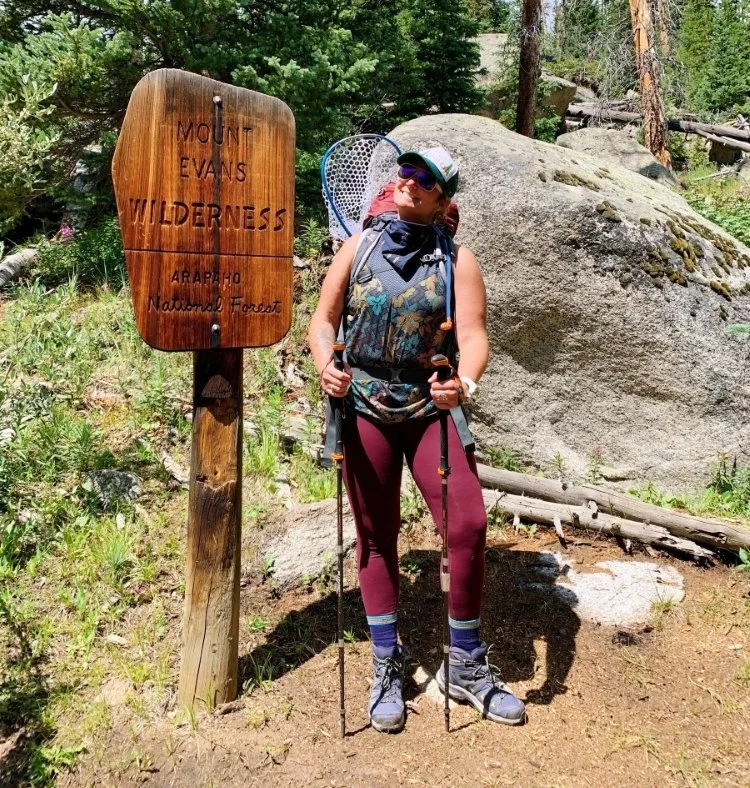
Q. What does adventure for all of us mean? And then what does an inclusive outdoors mean to you?
Ans: That is such a big and important question. What's most important is to have both access and accessibility together at play. Those words are similar, but they are not the same.
At onX, we talk a lot about the definition of "access" as the legal and physical ability to go to a place. Meaning to get onto public land, legally, I can get there, and physically, I can get there. In America, there are 16 million acres that are land or corner-locked, meaning they're surrounded by public land, and you physically can't get there. Access is about something being public and without a land-lock or physical barrier to getting there.
Then 'accessibility' is where inclusivity comes into play. It is more the human side. Are there socioeconomic barriers to getting to a place? Or barriers in mentorship or education to know how to do a sport? Transportation out of cities and into green spaces? Those are more inclusivity-based access terms and barriers that are interesting to think about.
I think it is important to be able to provide everyone with access to outdoor spaces. Sometimes that's easier said than done for certain geographies, user groups, and socio-economic classes, but everybody should have access to nature in some way. Even if that is a park for some and a 14er for someone else. It all matters for our deep, innate, personal well-being. It is so important to preserve access to public lands, which is a lot of work that onX does, and to break down barriers on the human-inclusivity side.
Q. Why do you think women's only outdoor groups and stories are important?
Ans: They can provide a much more approachable setting to help women learn, grow, and feel comfortable in some of these spaces and activities that can be intimidating. It can be hard to mountain bike or camp for the first time or to show up for an outdoor retreat where you don't know what it's going to be like. Knowing that you're doing it with like-minded humans can help you feel more comfortable, and therefore, build confidence to try new things, go farther, be more open in conversation, or any number of the beautiful things that happen at the retreat.
Q. How do you separate the outdoors as both a passion and a profession?
Ans: I don't know if I intentionally separate them or not at this point in my career. I don't get outside as much as I once did in my earlier years. Now, when I get outside to play, it's mostly personal. Though the two do blend in your mind. I've been doing a lot more advocacy work at onX lately, especially with our current administration on the public land front. Now, when I get outside, I have a much deeper awareness and gratitude for the unique amount of public land that Americans can access. No country has what we have, and that's really special and worth fighting for.
Q. What's your most memorable experience outdoors?
Ans: The one that I was gonna say is the most memorable, or at least the most story-written adventure of my life, was when I rode my bike across the country in 2011.
I set out with a friend, just me and another gal, and we each pulled trailers on our bikes with way too much stuff. We were ill-prepared, really, and riding high on positivity, hopes, and prayers. We made our way across, and it was just an incredible adventure of self-growth, self-love, and seeing kindness in the people that we met along the way. Most of the time, our route took us through small-town America. I felt like I could kind of do anything after that. I say that humbly, but it was an empowering adventure and a great reminder about all the incredible people and places in our country.
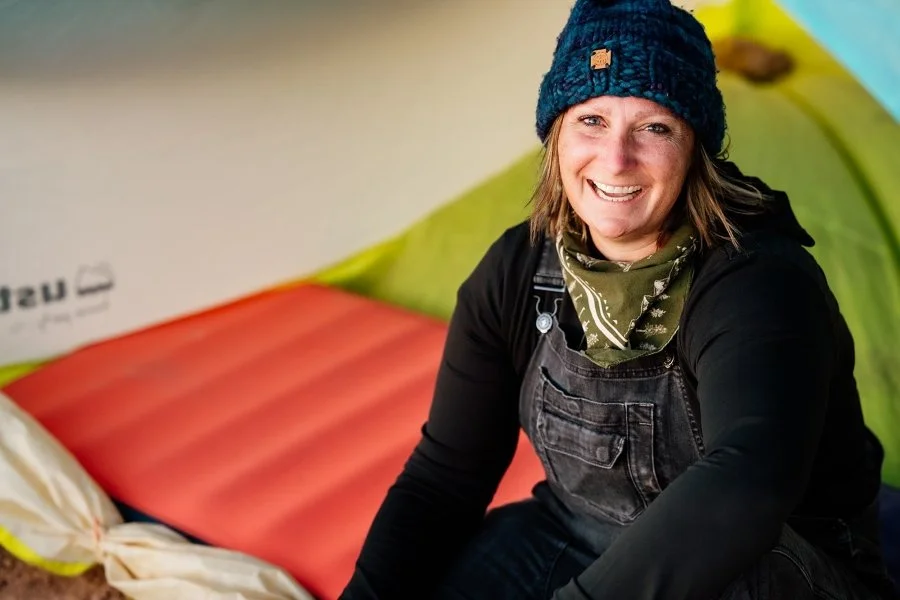
Q. What prompted you to do that?
Ans: It was a little seed in my brain for a couple of years. I had known other people to do it, and bikes had been a huge part of my life. I worked at bike shops and was pretty immersed in the bike community for a lot of years. I was ready to do something big and bold, and figured, why not? My friend Carly, who was a great college buddy, had recently hiked the Appalachian Trail. She wasn't a cyclist by any means, but I knew she understood what a big-hearted adventure like that would take. Bikes or foot, so much is the mental game. We just started researching and planning. I'll never forget the day we were sitting at a coffee shop in Boulder and bought our one-way tickets to San Francisco. It took us 54 days, riding about 70 miles a day on average.
Q. Who is another woman who inspires you in the outdoors?
Ans: One woman who quickly came to my mind is Dani Reyes-Acosta. She's always a badass, pushing limits in many ways.
Q. What does the outdoors mean to you in one word?
Ans: Empowerment is what came to mind first.
Q. You were stuck in Groundhog Day, and you had to wake up in one outdoor spot every day. Where would it be?
Ans: My gut answer was the Grand Canyon. I'm gonna stick with my gut here.
Q. What does women supporting women mean to you?
Ans: Bigger-than-self. Not about me, you know, it's about others. All of us.
At AdventurUs, we believe there is adventure in all of us. As a woman and LGBTQ+ owned adventure travel company based in Bend, Oregon, we create inclusive outdoor experiences designed to help women connect with nature, build community, and challenge themselves in new ways. From domestic retreats to international trips, our team of certified guides and trip leaders brings professional expertise and genuine heart to every journey.
We welcome women of all ages, backgrounds, and skill levels, and we're committed to breaking down the barriers that keep people from getting outside. Stories like Becky's remind us that the outdoors becomes richer and more powerful when more voices are included.
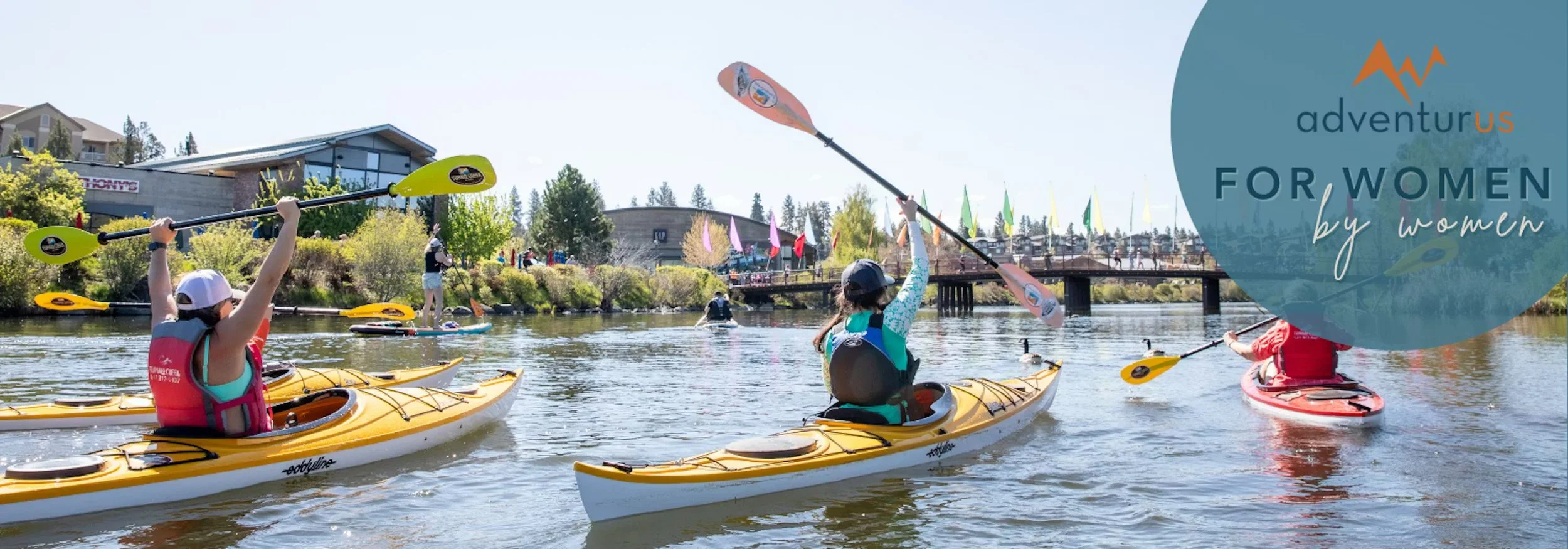
OUR SIGNATURE WOMEN'S ADVENTURE CAMP - BEND, OR
Bend, OR, USA
4 days | Thu 4 Jun - Sun 7 Jun 2026
Women & Whitewater: Salmon River Rafting Adventure
Boise & Salmon, Idaho
August 10-15, 2026
